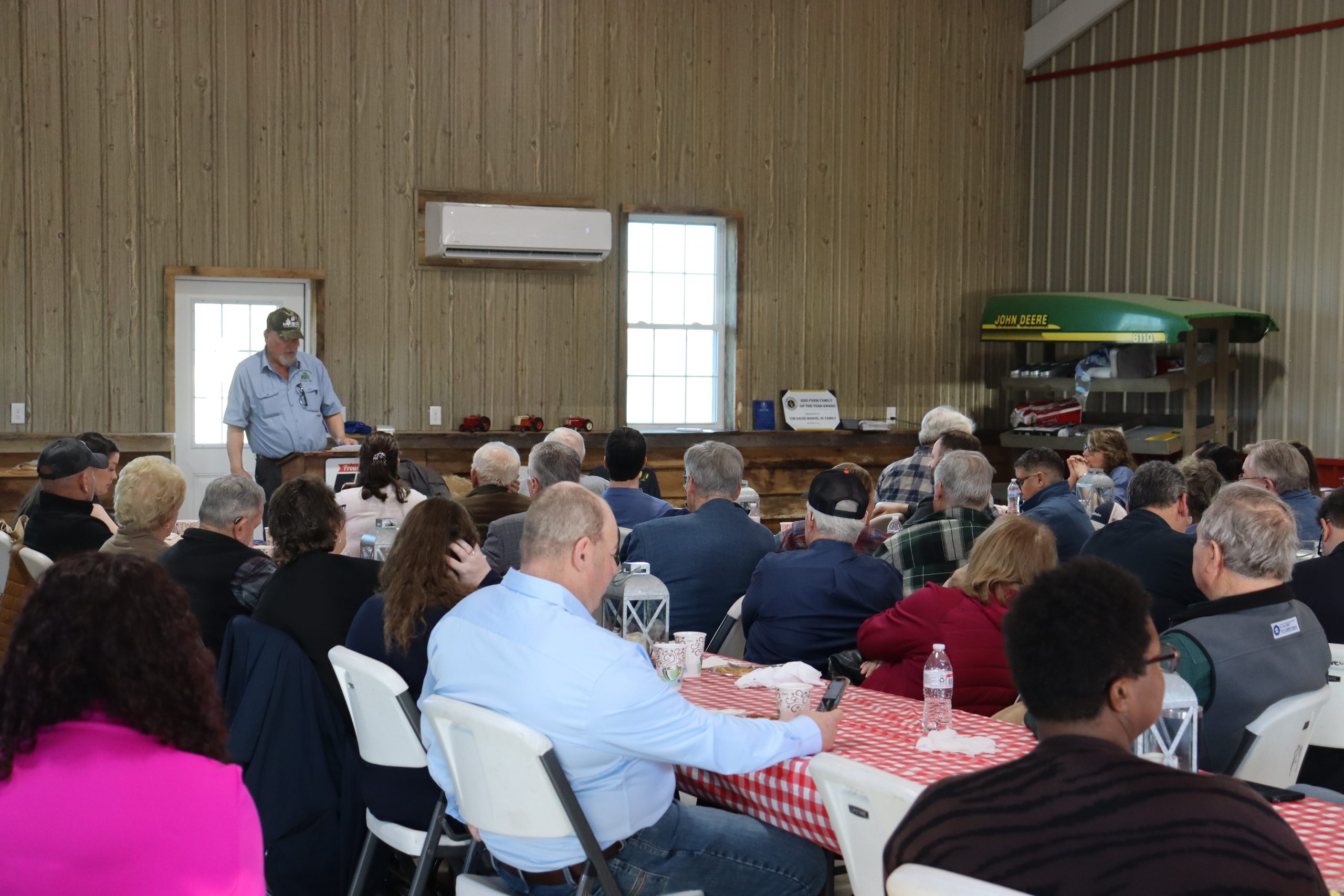
Farm Bureau members had the opportunity to meet with their legislators on February 27 and March 9 at the New Castle County and Kent County Farm Bureaus’ Legislative Breakfasts. During these events, members shared their experiences with the recent property reassessment, tightening profit margins, and increasing development pressures.
These Legislative Breakfasts serve as a way for Delaware Farm Bureau (DEFB) members and legislators to engage in direct, face‑to‑face conversations about the challenges facing agriculture. They also offer an opportunity to thank legislators for their continued support of the farming community.
A common theme throughout the discussions was that many farmers are struggling to provide for their families. They want to continue farming because it is their livelihood and passion, but many are unsure how long they can sustain their operations in Delaware.
DEFB President Bill Powers addressed the most recent property reassessment, noting its complexity. While some landowners experienced tax relief, others were hit so hard they are being forced to consider selling their operations. He emphasized the need to support Delaware’s top industry, agriculture, and highlighted DEFB’s support for the passage of Senate Bill 35, which would fairly tax farmers on structures used for production rather than treating them as residential.
Several farmers shared firsthand accounts of drastic tax increases. During New Castle County Farm Bureau’s breakfast, Matt Linton of Highland Orchards in Wilmington explained that his small farm parcel’s tax bill skyrocketed to nearly $35,000. He noted that they were forced to hire an attorney to contest a bill they could not afford, only to spend even more money while already operating on tight margins.
Similarly, Tom Puglisi of Puglisi Egg Farms in Middletown reported that his property was reassessed at more than twelve times its previous value. Despite going through the proper appeal process, he said Tyler Technologies and New Castle County continuously pushed their concerns aside. Puglisi shared that, like many others, he invested significant resources into challenging the reassessment and is still waiting for answers.
Jay Baxter and other farmers spoke about the difficulty of maintaining profitability as input costs continue to rise. They explained that farmers often must purchase at retail prices and sell at wholesale prices, making it challenging to support a family. Baxter encouraged other farmers to share their stories and connect with their neighbors and legislators to educate them on the agriculture way of life.
Direct‑to‑consumer farmers also spoke on their regulatory struggles. One local farmer who operates an intensive agriculture farm, shared that he is commonly held to the same standards as much larger farms. This creates significant difficulties with hiring help, particularly H‑2A workers.
For more information on DEFB’s advocacy efforts, contact DEFB Government Affairs Coordinator Sydnie Grossnickle at sydnie.grossnickle@defb.org or 302-697-3183.