The 2026 Delaware General Assembly session was one of the busiest in recent years for agricultural policy. From environmental regulation and farmland taxation to hunting rights, property assessments, and state budget investments, Delaware farmers faced numerous legislative proposals with long-term impacts on agriculture.
Throughout the session, the Delaware Farm Bureau (DEFB) tracked 49 bills and budget measures affecting agriculture, private property rights, land use, taxation, natural resources, and rural communities. DEFB staff, leadership, and members remained actively engaged, providing more than 30 in-person testimonies and written comments to ensure agriculture’s voice was heard.
Wins for Agriculture
Governor’s Council on Agriculture Expansion, Senate Bill (SB) 211
One of DEFB’s top priorities, SB 211 expands the Governor’s Council on Agriculture from seven to nine members. The legislation guarantees seats for livestock and poultry producers and creates a new position for a younger farmer, ensuring broader industry representation. As a DEFB-led initiative, SB 211 passed both chambers and was signed into law.
State Farm to Community Program, SB 53
DEFB supported SB 53, which codifies the Delaware Farm to Community Program. The bill strengthens connections between local farmers, food distributors, and food-insecure communities while creating opportunities for future state investment and expanded markets for Delaware producers. The legislation passed the General Assembly and awaits the Governor’s signature.
Sunday Hunting Expansion, House Bill (HB) 278
HB 278 expands Sunday hunting opportunities for designated game species while preserving landowner protections and agency oversight. DEFB supported the measure for its benefits to wildlife management and conservation. The bill has been signed into law.
Environmental Issues
Freshwater Wetlands, SB 9
SB 9 establishes Delaware’s first comprehensive freshwater wetlands permitting program. Following extensive discussion, the DEFB Board adopted a neutral position while advocating for agricultural exemptions, regulatory certainty, and practical implementation.
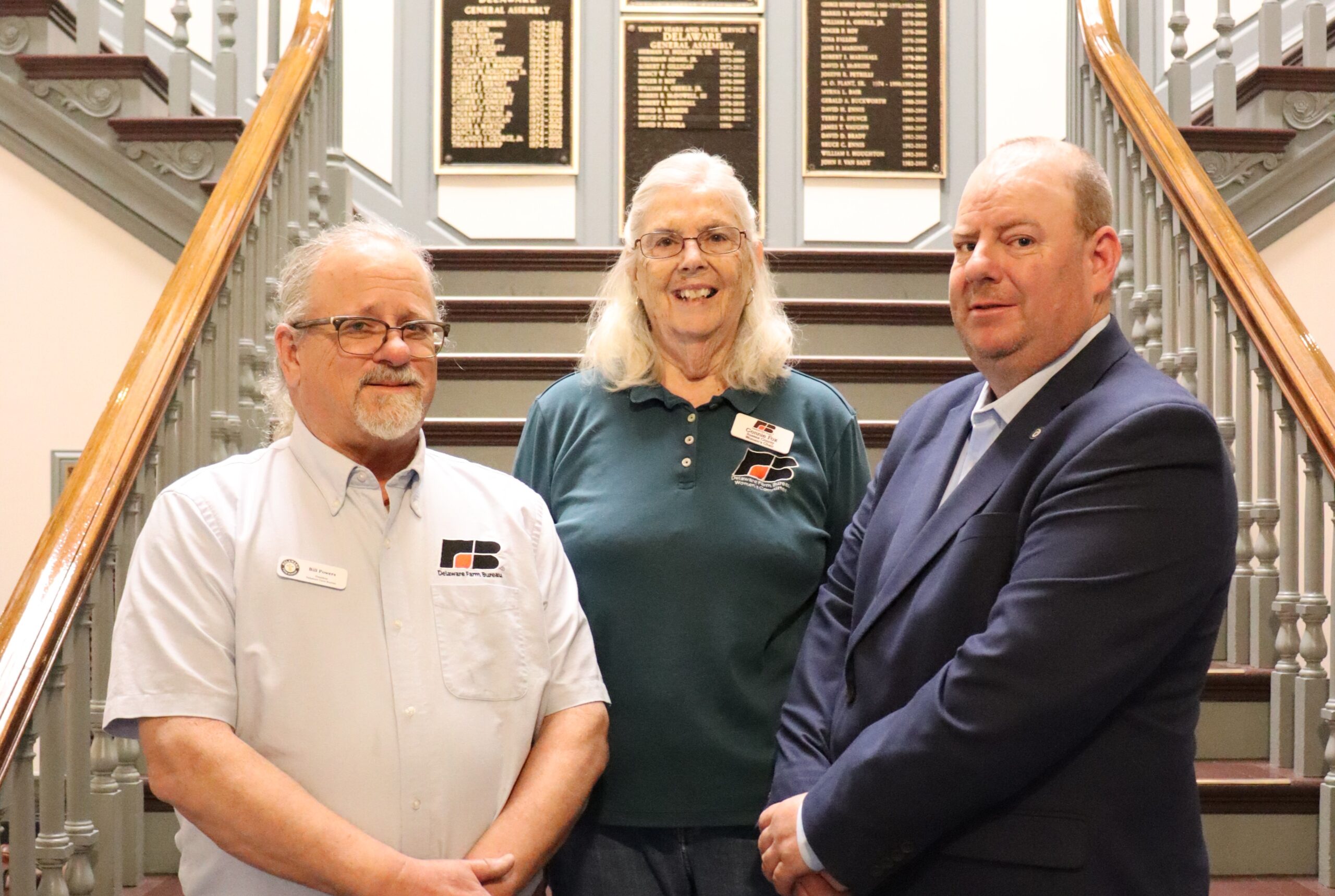
A key outcome was the inclusion of three Delaware Farm Bureau seats on the Wetlands Regulatory Advisory Committee, ensuring agriculture’s involvement as regulations are developed. Governor Meyer signed SB 9 on July 21 and appointed Jim Minner, Bill Powers, and Jay Baxter to represent DEFB on the committee.
Nutrient Management and Pesticide Legislation
DEFB remained neutral but closely monitored several bills that could affect farm operations.
HB 221 allows the Delaware Department of Agriculture to increase pesticide registration fees from a maximum of $140 to $500. The bill was signed into law.
HB 222 increases Nutrient Management Program penalties from $1,000 to $5,000 per violation. The bill awaits gubernatorial action.
SB 311 makes several updates to Delaware’s pesticide and agricultural inspection statutes. The legislation eliminates the biennial pesticide applicator license option due to limitations in DDA’s current licensing software. It also requires certified private applicators to maintain pesticide application records and make those records available for departmental inspection upon request. SB 311 passed the General Assembly and is awaiting the Governor’s signature.
Farmland Evaluation
Farmland Evaluation Advisory Committee, SB 254
SB 254 modernizes and expands the State Farmland Evaluation Advisory Committee while requiring regular reviews of the farmland valuation formula. The legislation maintains agricultural representation in the process and seeks to ensure assessments better reflect modern agriculture. The bill was signed into law.
Property Tax, Assessment, and Land Preservation
Agricultural Structures Tax Relief, SB 35
DEFB devoted significant effort to advocating for SB 35, which would have provided property tax relief for qualified agricultural structures. Although the bill did not pass, it elevated the issue among lawmakers and laid the groundwork for future legislative efforts.
Permanent Split-Tax Rate for New Castle County, HB 462
HB 462 permanently authorizes separate tax rates for residential and non-residential properties in New Castle County. Because most farms remain classified under the residential rate structure, DEFB supported the bill. The legislation passed the General Assembly and has been enacted without the Governor’s signature.
Property Assessment Reform
Property taxes and reassessments remained among the most closely watched issues of the session.
Property Assessment Working Group, House Concurrent Resolution (HCR) 150
HCR 150 establishes a statewide Property Assessment Working Group to review assessment standards and develop recommendations for the 154th General Assembly. DEFB secured a seat to ensure agricultural interests are represented.
Long-term Property Tax Reform Working Group, HCR 151
HCR 151 creates a separate working group to evaluate long-term property tax reform options and develop recommendations following Delaware’s reassessment process. DEFB is working to maintain agricultural representation in these discussions.
Statewide Split-Tax Proposal, SB 350
SB 350 would have established a statewide property classification system with different tax rates by property type. After concerns were raised regarding potential impacts and implementation challenges, the bill did not advance out of committee.
Budget Investments for Agriculture
One of the most significant accomplishments of the 2026 legislative session was the approval of Delaware’s capital budget, which included key investments supporting agriculture and conservation across the state.
The Fiscal Year 2027 Bond Bill (HB 500) provides:
- $8 million for the Cover Crop Program
- $1.5 million for a Deer Damage Indemnity Assistance Pilot Program
These investments reflect priorities strongly advocated for by DEFB, its members, DDA, Conservation Districts, and other agricultural partners.
Continued funding for the Cover Crop Program reinforces Delaware’s commitment to water quality improvement, soil health, and conservation while helping farmers implement proven best management practices on their operations.
The Deer Damage Indemnity Assistance Pilot Program represents an important first step toward addressing one of the most persistent challenges facing Delaware farmers. DEFB views this investment as a foundation for future efforts to develop long-term solutions to help producers mitigate crop losses from deer damage.
Looking Ahead
Although the 2026 legislative session has concluded, much of the work is just beginning. DEFB will remain actively engaged as numerous initiatives move into the implementation phase, including freshwater wetlands regulations, farmland assessment reviews, and property tax modernization efforts.
This year’s legislative accomplishments underscore the value of maintaining a strong and consistent agricultural presence in Dover. Through the efforts of DEFB staff, leadership, and members, the voice of Delaware agriculture was heard throughout the legislative process and helped shape policies affecting farms, rural communities, and the industry’s future.
DEFB remains committed to ensuring that farmers continue to have a seat at the table as these policies transition from legislation to implementation. For more information about DEFB’s advocacy efforts or to learn how to get involved, please contact Sydnie Grossnickle, Government Affairs Coordinator, at sydnie.grossnickle@defb.org or (302) 697-3183.